Mid-Century Modern Home Remodeling in Phoenix, Scottsdale & Tempe
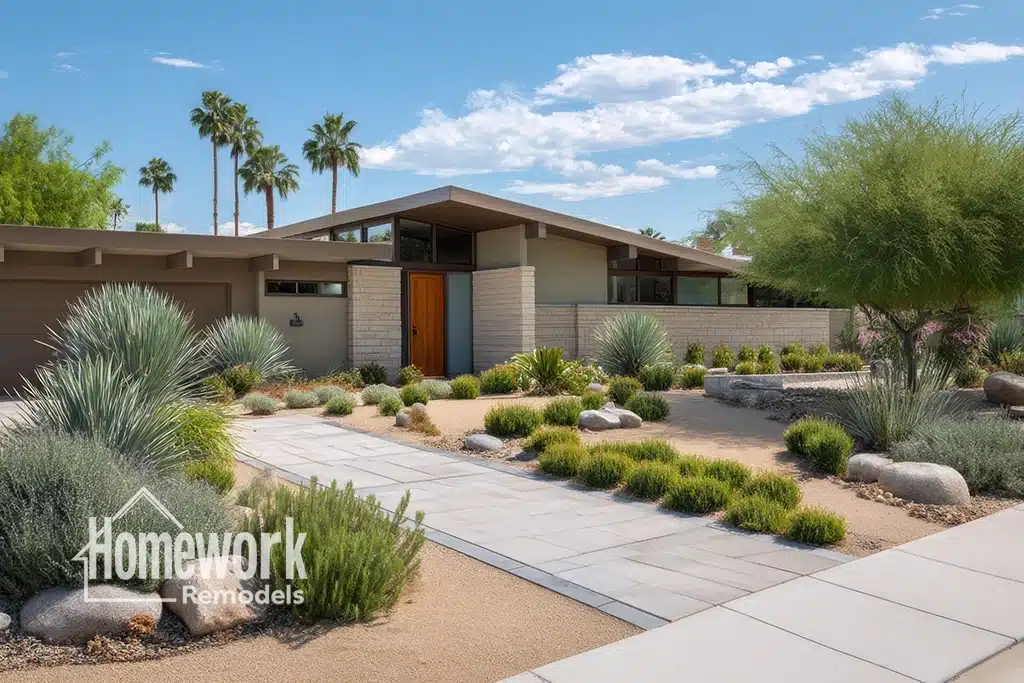
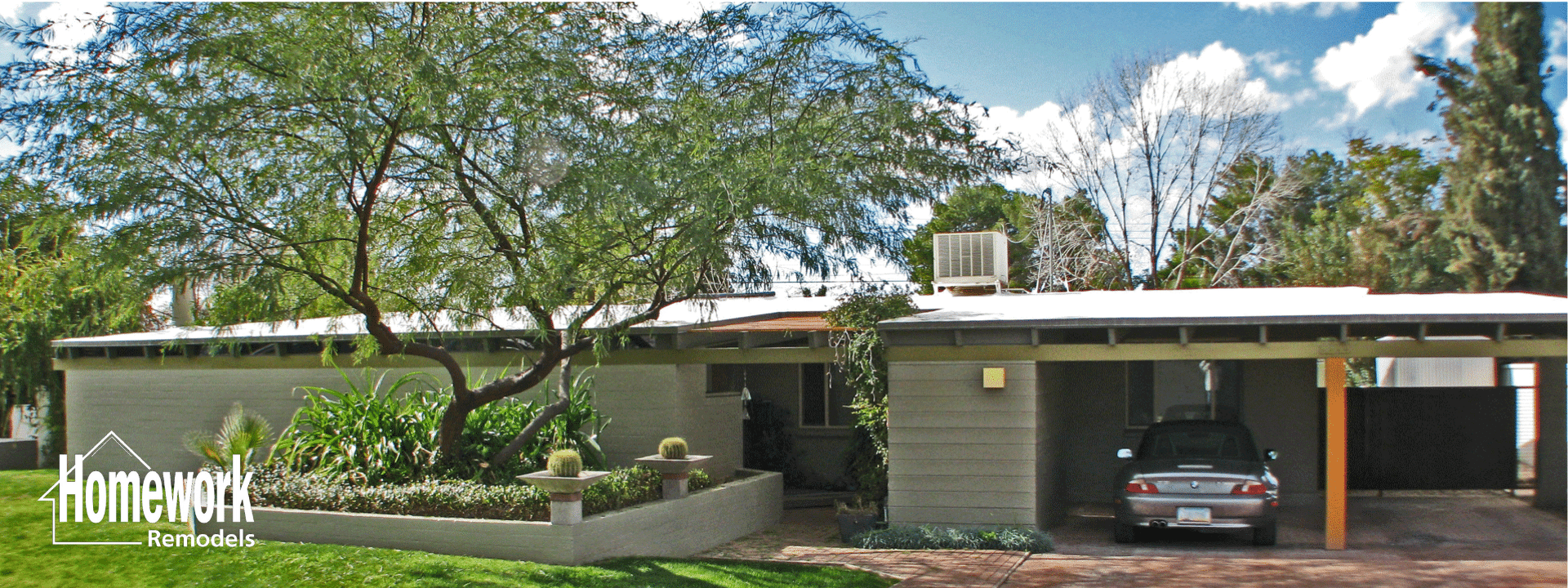
Mid-century modern homes remain some of the most architecturally compelling properties in the Valley because they were designed around principles that still feel remarkably relevant today. Their clean horizontal lines, restrained detailing, expansive glazing, exposed structure, clerestory lighting, and strong indoor-outdoor relationships create homes that feel open, calm, and deeply connected to the surrounding desert environment. Throughout Phoenix, Scottsdale, Tempe, Mesa, Paradise Valley, Arcadia Lite, and Ahwatukee, these homes continue to attract homeowners who value architecture that emphasizes simplicity, proportion, and intentional living rather than excess ornamentation.
Yet many original mid-century homes were designed for a very different era. Kitchens were often isolated from gathering spaces. Bathrooms were compact and highly utilitarian. Electrical systems, insulation, windows, and HVAC systems frequently struggle to meet modern comfort expectations in the Sonoran Desert climate. Families today often want larger entertaining spaces, more connected living areas, spa-style bathrooms, guest accommodations, improved storage, better energy performance, and stronger indoor-outdoor integration while still preserving the architectural integrity that made the home special in the first place.
That balance is where thoughtful mid-century modernization becomes essential.
At Homework Remodels, we believe the best remodeling projects preserve the original architectural spirit of the home while carefully adapting it for modern living. Since 2005, our design-build remodeling team has helped homeowners throughout Metro Phoenix modernize kitchens, bathrooms, whole homes, open-concept layouts, additions, guest houses, and structural configurations while protecting the visual rhythm, clean geometry, and architectural honesty that define mid-century modern design.
Many homeowners beginning the planning process first explore our Mid-Century Modern Home Remodeling Guide to better understand preservation-sensitive remodeling strategies for architecturally significant homes.
What Mid-Century Modernization Really Means
We intentionally use the phrase “mid-century modernization” because it reflects a more thoughtful philosophy than simple renovation or cosmetic updating. Mid-century homes depend heavily on balance, structure, natural light, geometry, and restraint. Remodeling them successfully requires understanding how the original architecture was intended to function before introducing changes that affect the home visually or structurally.
True modernization respects the architectural DNA of the property. It protects expressive rooflines, exposed beams, clerestory windows, low horizontal proportions, and the relationship between interior and exterior spaces. At the same time, it improves how the home functions for modern life through better circulation, more connected gathering spaces, upgraded systems, expanded storage, enhanced comfort, and improved energy performance.
The goal is not to transform a mid-century home into a generic contemporary remodel. The goal is to preserve what makes the architecture timeless while helping the home perform beautifully for decades to come.
Many homeowners evaluating larger architectural transformations continue researching our approach to mid-century modern design-build remodeling to better understand how integrated planning protects architectural integrity during construction.
Why Mid-Century Modern Homes Continue to Feel Timeless
One reason mid-century homes remain so desirable is that their design principles still align naturally with how many people want to live today. Open visual connections, natural daylight, indoor-outdoor entertaining, flexible gathering spaces, and strong relationships to landscape and climate all feel remarkably contemporary despite these homes being decades old.
In Arizona, those principles become even more meaningful. The Sonoran Desert encourages outdoor living, filtered daylight, shaded patios, and visual connection to the surrounding environment. Mid-century architecture often responds beautifully to these conditions through deep overhangs, breezeways, interior courtyards, clerestory lighting, and expansive glazing carefully positioned to frame views while managing sunlight.
Many newer homes offer larger square footage but lack the intentional simplicity and spatial clarity found in thoughtfully designed mid-century neighborhoods. That is one reason many homeowners choose modernization rather than replacement. They want homes that feel architecturally authentic rather than oversized or visually cluttered.
Successful remodeling projects often focus less on dramatically reinventing the home and more on enhancing what the original architecture already does well. Improved circulation, refined material transitions, stronger indoor-outdoor flow, upgraded comfort systems, and better functionality can dramatically improve daily life without erasing the identity of the property itself.
The Structural Complexity Behind Mid-Century Remodeling
Despite their visual simplicity, many mid-century homes are structurally complex beneath the surface. Long roof spans, post-and-beam framing systems, low-slope roofs, extensive glazing, shallow ceiling cavities, slab foundations, and unconventional framing relationships require careful coordination during remodeling.
Many homes throughout Phoenix, Scottsdale, Arcadia Lite, Tempe, Paradise Valley, and Mesa also contain aging infrastructure that was never designed for today’s electrical demands, larger kitchens, open-concept layouts, or modern HVAC systems. Plumbing routes, insulation cavities, and structural load paths frequently become major planning considerations during modernization.
Removing walls or enlarging openings without proper engineering can compromise the structural rhythm that gives the architecture its visual clarity. Likewise, poorly designed additions can disrupt roof geometry, window alignment, natural lighting balance, and massing relationships that originally made the home feel cohesive.
This is one reason integrated planning becomes so important during preservation-sensitive remodeling projects. Homeowners evaluating larger structural transformations often continue researching our approach to planning architecturally sensitive remodeling projects before beginning major construction.
Our design-build process allows structural coordination, budgeting, engineering, material planning, permitting, and construction sequencing to evolve together rather than being handled independently. That level of integration becomes especially important when projects involve structural reconfiguration, low-slope roof modifications, additions, large glazing systems, whole-home modernization, or open-concept conversions.
Open-Concept Living in Mid-Century Homes
Many original mid-century homes were designed with relatively compact kitchens separated from primary gathering areas. While those layouts reflected the lifestyle expectations of their era, today’s homeowners often prefer kitchens that feel more connected to entertaining spaces and everyday living.
Opening kitchens successfully in mid-century homes requires more discipline than simply removing walls. The challenge is preserving the architectural calmness and horizontal visual flow that define the home while improving circulation, functionality, and social connection.
Successful open-concept remodeling often focuses on maintaining long sightlines, preserving ceiling continuity, and carefully integrating structural modifications so the architecture still feels balanced and intentional. In many homes, hidden beams or carefully coordinated engineering solutions allow walls to be removed while preserving the visual simplicity of the original structure.
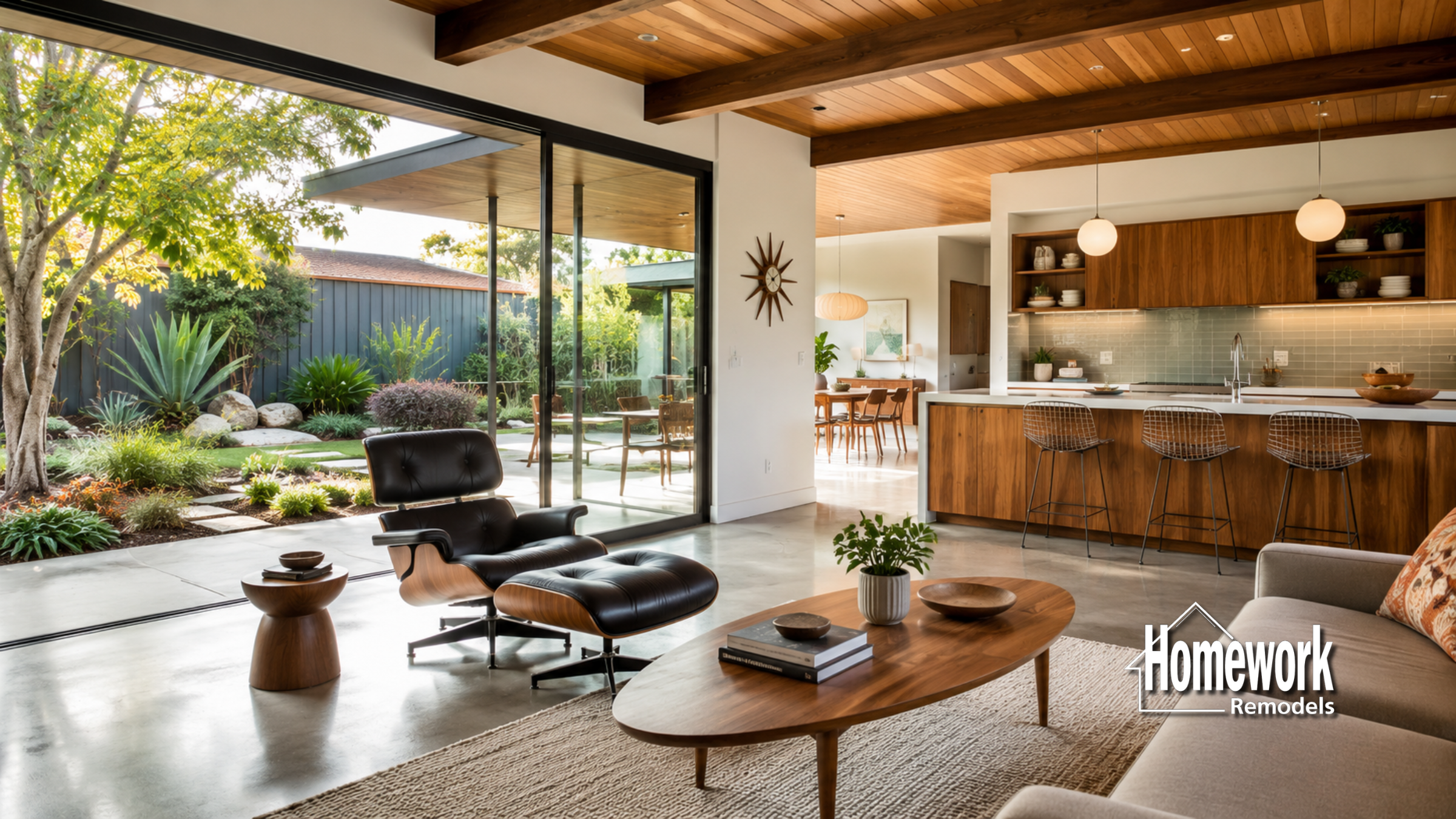
Cabinetry and material selections also play an important role. Slab-front cabinetry, integrated storage, restrained detailing, warm wood tones, and long horizontal lines often feel more architecturally appropriate than heavily decorative kitchen styles. Lighting is typically layered carefully to preserve the atmosphere of the home without visually cluttering the space.
Many homeowners planning larger layout transformations continue exploring our guidance on creating open-concept living spaces to better understand how thoughtful structural planning can improve circulation while preserving architectural integrity.
Kitchen Remodeling with Architectural Continuity
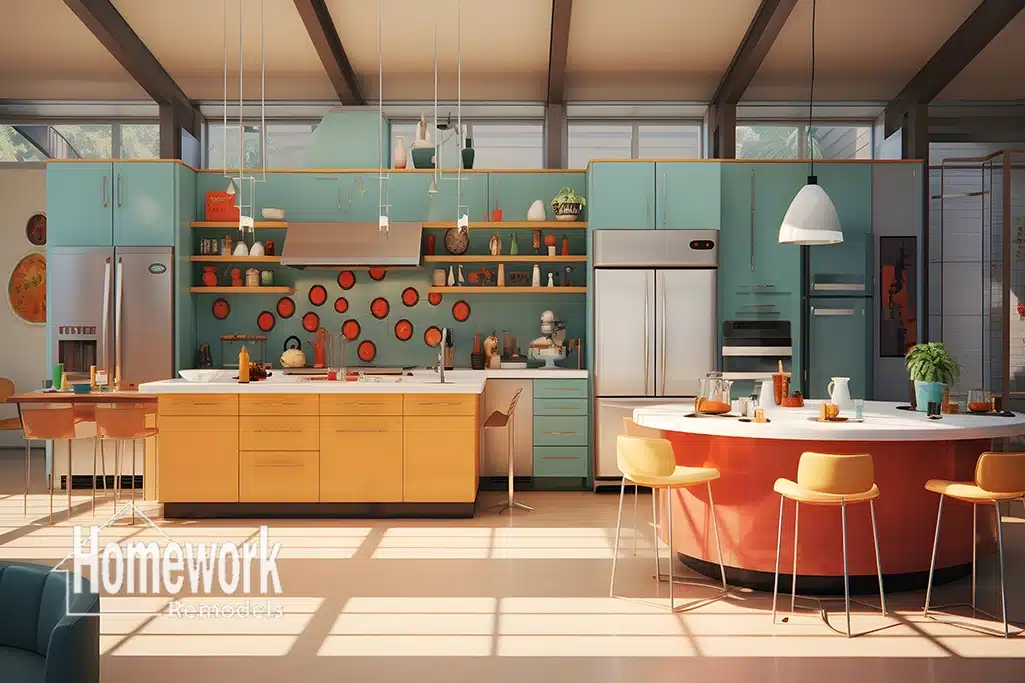
Mid-century kitchens work best when they feel naturally integrated into the surrounding architecture rather than treated as isolated showpieces. The strongest remodeling projects preserve visual simplicity while quietly improving functionality, storage, lighting, and appliance integration.
Oversized islands, dramatic decorative finishes, or highly ornamental cabinetry can easily overpower the architectural restraint that defines mid-century homes. Instead, successful kitchens often emphasize proportional balance, integrated materials, natural textures, and clean transitions between spaces.
Modernization frequently includes improved appliance planning, better workflow, expanded storage, integrated ventilation, enhanced lighting systems, and larger entertaining areas while preserving the visual openness and geometric clarity of the home.
Natural daylight also becomes especially important. Clerestory windows, expanded glazing, skylights, and carefully positioned lighting can dramatically improve the feeling of openness without disrupting the original design language of the architecture.
Homeowners evaluating larger kitchen-centered modernization projects often continue researching our broader approach to improving kitchen flow and functionality while planning long-term remodeling goals.
Spa-Style Bathrooms with Mid-Century Restraint
Bathrooms in many original mid-century homes were compact and highly utilitarian by today’s standards. Modern homeowners frequently want larger showers, improved lighting, expanded storage, dual vanities, and a more calming daily experience while still preserving the simplicity associated with authentic mid-century architecture.
The strongest bathroom modernization projects avoid excessive ornamentation or trend-heavy detailing. Instead, they focus on proportion, texture, lighting quality, and material harmony. Floating vanities, warm wood finishes, frameless glass, large-format tile, curbless showers, and indirect lighting often feel more architecturally integrated than heavily decorative fixture packages or visually busy materials.
Visual simplicity becomes especially important in smaller spaces. Reducing clutter, maintaining long sightlines, and simplifying transitions between surfaces helps preserve the calm atmosphere associated with mid-century design. Even compact bathrooms can feel dramatically more open when lighting, materials, and proportions are coordinated carefully.
Many homeowners planning broader modernization projects continue exploring our approach to architecturally integrated bathroom remodeling to better understand how bathrooms connect to larger whole-home remodeling strategies.
Indoor-Outdoor Living in the Sonoran Desert
Few architectural styles embrace indoor-outdoor living as naturally as mid-century modern homes. In Arizona especially, patios, courtyards, shaded outdoor rooms, and expansive glazing create homes that feel deeply connected to the desert landscape.
Modern remodeling projects frequently strengthen those relationships even further. Large multi-panel sliders, covered patios, landscape lighting, outdoor kitchens, shaded seating areas, and carefully integrated outdoor spaces can dramatically improve how the home functions for entertaining and everyday life.
The challenge is maintaining restraint. Successful indoor-outdoor modernization should feel seamless rather than excessive. Outdoor living spaces should extend the architecture naturally instead of competing with it visually.
Many homeowners also choose to improve glazing performance, insulation, and solar control while preserving the clean sightlines and horizontal openness that define mid-century architecture. Modern materials and systems now allow homeowners to significantly improve comfort and efficiency without sacrificing the visual simplicity of the home.
Designing Additions That Feel Original to the Home
One of the most difficult aspects of mid-century modernization is designing additions that feel naturally connected to the original architecture rather than visibly attached afterward.
Poorly designed additions can quickly disrupt roofline continuity, window rhythm, massing relationships, natural light balance, structural symmetry, and the visual proportions that make the home feel cohesive. Successful additions require careful architectural study and restraint.
Roof geometry, glazing proportions, eave depths, structural alignment, and material continuity all influence whether new spaces feel integrated into the original architecture. In many cases, subtlety produces stronger long-term results than dramatic expansion.
Our team frequently helps homeowners integrate expanded kitchens, primary suites, guest accommodations, detached casitas, home offices, entertainment spaces, and flexible multigenerational living areas while preserving the architectural identity of the original property.
Homeowners exploring flexible living arrangements often continue researching our resources on casitas and guest house additions while evaluating how additional living space can be integrated thoughtfully into mid-century homes.
Mid-Century Modern Neighborhoods Across Metro Phoenix
Mid-century architecture throughout the Valley varies significantly from one neighborhood to another. Each community presents different architectural opportunities, preservation concerns, lot conditions, permitting requirements, and design personalities.
In Arcadia Lite, many projects focus heavily on balancing modernization with preservation while respecting the growing appreciation for authentic mid-century homes. Homeowners researching these transformations often continue exploring Arcadia Lite mid-century modernization.
Scottsdale’s desert modern homes frequently emphasize indoor-outdoor entertaining, refined material integration, and luxury modernization while preserving architectural restraint. Many homeowners continue reviewing Scottsdale mid-century modern remodeling to explore ideas specific to the area.
Tempe neighborhoods often emphasize practical family modernization, ranch-style reconfiguration, and open-concept living while preserving the simplicity and clarity of original layouts. Homeowners researching these communities frequently continue exploring Tempe mid-century modern remodeling.
Throughout Phoenix, Paradise Valley, Mesa, and Ahwatukee, homeowners continue modernizing architecturally significant homes in ways that improve livability while protecting the design principles that made these neighborhoods important in the first place.
Why Homeowners Choose Homework Remodels
Homeowners throughout Metro Phoenix choose Homework Remodels because our approach goes beyond surface-level remodeling. We believe mid-century homes deserve thoughtful modernization that respects their architectural origins while improving how the home performs and functions today.
Our team combines architectural sensitivity, structural remodeling experience, certified remodeling expertise, and extensive experience coordinating complex modernization projects throughout the Valley. We place heavy emphasis on preparation, communication, engineering coordination, material continuity, and long-term planning so homeowners can modernize their homes without sacrificing the qualities that made them special in the first place.
Our leadership team includes professionals holding respected industry certifications:
- NARI Master Certified Remodeler (MCR)
- Master Certified Kitchen & Bath Remodeler (MCKBR)
- Universal Design Certified Professional (UDCP)
- Green Certified Professional (GCP)
Homeowners planning larger remodeling projects often continue exploring our Core Guides for remodeling planning to better understand budgeting, preconstruction, design-build coordination, and long-term remodeling strategy.
Explore More Mid-Century Modern Remodeling Resources
Homeowners researching preservation-sensitive modernization frequently continue exploring:
- Phoenix mid-century modern remodeling
- Mesa mid-century modern remodeling
- Paradise Valley mid-century modern remodeling
- Ahwatukee mid-century modern remodeling
- Village Grove Scottsdale mid-century modern remodeling
- Windsor Square mid-century modern remodeling
- Paradise Gardens mid-century modern remodeling
Ready to Modernize Your Mid-Century Modern Home?
The best mid-century remodeling projects preserve what made the home timeless while improving how it supports modern living. Whether you are planning a kitchen remodel, whole-home modernization, structural reconfiguration, guest house addition, or indoor-outdoor transformation, Homework Remodels can help you approach the process with architectural sensitivity, careful planning, and long-term vision.
Many homeowners begin by scheduling a conversation through our Free Remodeling Consultation page to discuss their home, modernization priorities, architectural goals, and long-term plans for the property.
We proudly serve homeowners throughout Phoenix, Scottsdale, Tempe, Mesa, Paradise Valley, Arcadia Lite, Ahwatukee, and surrounding communities with thoughtful design-build remodeling focused on preservation-sensitive mid-century modernization.
AWARD WINNING HOME AND COMMERCIAL RENOVATION SERVICES
Got a project in mind? Let’s talk! We’re excited to help you make it happen.